
Understanding Curriculum and Instruction Certification Online
Curriculum and Instruction certification empowers educators to refine teaching methods and enhance student outcomes․
Online programs offer flexible pathways for professionals seeking advanced credentials,
particularly those with existing master’s degrees or aiming for specialized roles within education․
What is Curriculum and Instruction?
Curriculum and Instruction is a specialized field within education focused on the systematic design, development, implementation, and evaluation of learning experiences․ It’s not simply what teachers teach, but how they teach it, ensuring alignment with learning objectives and student needs․ This discipline delves into pedagogical theories, instructional strategies, and assessment methods to optimize educational effectiveness․
Professionals in this area analyze learning goals, create engaging lesson plans, select appropriate resources, and assess student progress․ They also stay current with educational research and best practices․ For those holding a Master’s degree not recognized by bodies like the Georgia Professional Standards Commission, targeted certificates offer a pathway to advanced professional-level certification․ The field emphasizes inquiry, evidence-based practices, and continuous improvement of educational programs․
The Growing Demand for Certified Professionals
The demand for certified Curriculum and Instruction professionals is steadily increasing, driven by evolving educational landscapes and a focus on data-driven improvement․ Schools and districts seek educators equipped to design and implement effective curricula aligned with rigorous standards․ This need extends to adapting programs for diverse learners and integrating new technologies․
Furthermore, the emphasis on assessment and evaluation necessitates skilled professionals who can accurately measure student progress and inform instructional decisions․ Online certification provides a convenient pathway for existing teachers to enhance their expertise and advance their careers․ Professionals with specialized credentials are highly valued for leadership roles, curriculum development positions, and instructional coaching opportunities, bolstering overall educational quality․

Online Certification Programs: An Overview
Online programs offer accessible routes to Curriculum and Instruction certification, catering to working educators․ Walden University and SUNY provide examples of these flexible, accredited options․
Benefits of Pursuing Certification Online
Online certification in Curriculum and Instruction provides significant advantages for educators․ The primary benefit is flexibility, allowing professionals to continue working while advancing their qualifications․ This is particularly crucial for teachers already engaged in full-time positions․
Furthermore, online programs often offer a wider range of specializations and are accessible regardless of geographic location, removing barriers to professional development․ Institutions like Walden University streamline the admissions process for their certificate programs, making it easier to begin․
These programs enhance career prospects, potentially leading to leadership roles or specialized teaching positions․ Ultimately, online certification empowers educators with updated pedagogical knowledge and skills, directly benefiting student learning outcomes․
Types of Online Curriculum and Instruction Certifications
Several pathways exist for online Curriculum and Instruction certification․ Post-Masters Certificates, like those offered by Walden University, are designed for educators already holding a Master’s degree․ These focus on specialized skills in curriculum, instruction, and assessment․
Alternatively, certificates are available for those with existing Master’s degrees not currently recognized by specific state bodies, such as the Georgia Professional Standards Commission․ These bridge the gap for advanced certification․
It’s important to note that some Master of Education (M․Ed․) programs, like Penn State’s, do not lead to initial teacher certification, focusing instead on advanced pedagogical knowledge․ Therefore, careful program selection is crucial based on individual career goals․

Certification Pathways & Requirements (as of 03/31/2026)
Certification routes vary, including post-masters options and programs for existing degrees․ Requirements involve a Master’s, regional accreditation, and specific program criteria․
Post-Masters Certificates
Post-Masters Certificates in Curriculum and Instruction are specifically designed for educators already holding a Master’s degree․ These programs offer a focused, efficient route to enhance qualifications and potentially meet advanced certification requirements․ Walden University, for example, provides a Post-Masters Certificate in Curriculum, Instruction, and Assessment, streamlining the admissions process for those with prior graduate work․
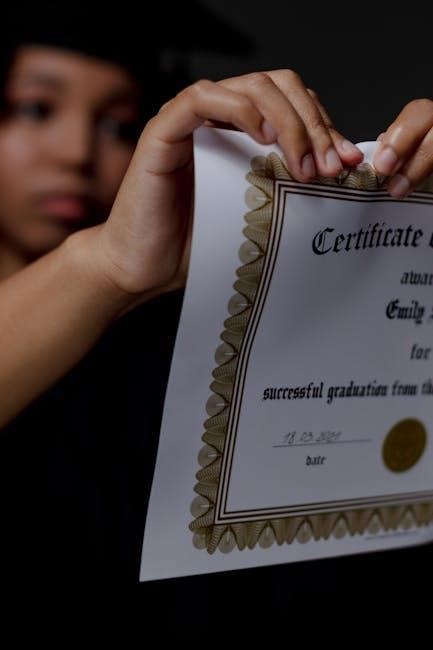
Importantly, these certificates aren’t always a direct path to initial teacher certification․ They often cater to teachers seeking to upgrade credentials or address specific state recognition needs, such as Georgia’s Professional Standards Commission requirements for advanced certification when a prior Master’s isn’t recognized․ Admission requirements vary based on the program level, but generally involve a completed Master’s from a regionally accredited institution․
Certificates for Existing Master’s Degrees (e;g․, Georgia PSC Recognition)
Certain certificates address specific state-level recognition gaps for educators already possessing a Master’s degree․ The Curriculum and Instruction Certificate Program, offered online, directly targets teachers whose existing Master’s isn’t recognized by the Georgia Professional Standards Commission (PSC) for advanced professional-level certification․
This pathway provides a focused solution, allowing educators to gain the necessary credentials for advancement within the Georgia system․ Completion requires a Master’s degree in Curriculum and Instruction from a regionally accredited institution․ These certificates demonstrate a commitment to professional development and ensure alignment with state standards, facilitating career progression for qualified educators․
Master of Education (M․Ed․) Programs – Not Always Leading to Initial Certification
While an M․Ed․ in Curriculum and Instruction signifies advanced study, it doesn’t automatically guarantee initial teacher certification․ Penn State World Campus explicitly states its M․Ed․ program isn’t designed for those seeking initial certification in any state; This program focuses on deepening pedagogical knowledge for already certified educators․
Prospective students should carefully evaluate program goals․ An M․Ed․ often serves as professional development for current teachers, enhancing skills in curriculum design, assessment, and instructional strategies․ Those needing initial licensure should seek programs specifically designed to fulfill state certification requirements, rather than relying solely on an M․Ed․ degree․

Specific Program Examples & Institutions
Several institutions offer online curriculum and instruction programs, including Penn State, Walden University, Teachers College (Columbia), and SUNY․
Each provides unique pathways and focuses for aspiring educators․

Penn State World Campus – M․Ed․ Focus (No Initial Certification)
Penn State World Campus delivers a Master of Education (M․Ed․) in Curriculum and Instruction entirely online, designed for experienced educators․ However, it’s crucial to understand this program does not lead to initial teacher certification in any state․
The curriculum centers around inquiry, evidence-based practices, and assessment, with C I 590 recommended as the initial course․
Coursework explores current school programs, their impact on students, and the challenges of integrating new content․
Each course carries three credit hours, providing a focused and flexible learning experience for professionals seeking to deepen their pedagogical knowledge without pursuing certification․
Walden University – Post-Masters Certificate in Curriculum, Instruction, and Assessment
Walden University offers a fully online Post-Masters Certificate in Curriculum, Instruction, and Assessment, specifically designed for educators already holding a Master’s degree․ This certificate streamlines the admissions process, recognizing prior academic achievement․
The program caters to professionals seeking specialized knowledge in these core areas of education․
Walden emphasizes a simplified admissions journey, acknowledging that requirements vary based on the certificate program level․
Earning this certificate is a significant step towards enhancing expertise and potentially advancing career opportunities within the educational landscape․
Teachers College, Columbia University – Ed․D․ Curriculum and Teaching Requirements
Teachers College, Columbia University’s Doctor of Education (Ed․D․) program in Curriculum and Teaching has specific foundational requirements for first-year students․
These include mandatory courses like Camp & T 6101, taken in the fall semester, alongside a concurrent camp experience․
Following this, all first-year Ed․D․ students must complete Camp & T 6102 in the spring semester․
These courses are designed to establish a strong base in curriculum theory and pedagogical practices․
The program focuses on developing advanced scholars and practitioners prepared to lead educational innovation and research․
SUNY – Curriculum and Instruction (Grades B-12) MSEd
SUNY offers a Master of Science in Education (MSEd) specializing in Curriculum and Instruction for educators aiming to teach grades B-12․
This program provides a comprehensive understanding of curriculum development, instructional strategies, and assessment techniques․
Designed for practicing teachers, the curriculum emphasizes practical application and research-based practices․
Students explore diverse learning needs and develop skills to create inclusive and effective learning environments․
The program prepares graduates for leadership roles in schools and districts, fostering continuous improvement in educational practices across various grade levels․

Coursework & Curriculum Focus
Core curriculum topics include inquiry, evidence-based practices, and assessment, equipping educators with tools for impactful instruction and continuous improvement․

Core Curriculum Topics
A robust curriculum within these certification programs delves into several key areas crucial for modern educators․ Foundational coursework often begins with an introduction to colleagues and the program, emphasizing themes of inquiry, evidence, and assessment – a cornerstone at institutions like Penn State World Campus․
Further exploration encompasses current school programs and options, analyzing their impact on pupils and addressing the challenges of integrating new content effectively․ Programs also focus on understanding the interplay between curriculum design and practical classroom application, preparing educators to critically evaluate and adapt existing materials․
The emphasis on inquiry and evidence-based practices ensures that certified professionals are equipped to make data-driven decisions, ultimately leading to improved student learning experiences and outcomes․
Assessment and Evaluation in Curriculum
Effective assessment is central to curriculum and instruction, and certification programs dedicate significant attention to this area․ Professionals learn to design and implement various assessment methods – formative, summative, and authentic – to accurately gauge student understanding and program effectiveness․
A key component involves analyzing assessment data to inform instructional decisions and refine curriculum design․ This aligns with the emphasis on inquiry and evidence-based practices, ensuring educators move beyond subjective evaluations․
Walden University’s Post-Masters Certificate, for example, likely covers these principles․ Understanding how to evaluate curriculum’s alignment with learning objectives and standards is also crucial, preparing educators to advocate for continuous improvement within their schools․
Inquiry and Evidence-Based Practices
Curriculum and instruction certification increasingly emphasizes a research-driven approach to teaching․ Programs cultivate educators’ abilities to pose insightful questions about their practice and systematically investigate solutions․ This involves utilizing action research methodologies and critically evaluating existing educational research․
Penn State World Campus’s M․Ed․ program specifically highlights themes of inquiry, evidence, and assessment, suggesting a strong focus on this skillset․ Professionals learn to analyze student data, assess program effectiveness, and adapt instructional strategies based on empirical evidence․
This commitment to evidence-based practices ensures that curriculum decisions are grounded in what demonstrably works, leading to improved student outcomes and a more effective educational system․

Admission Requirements & Prerequisites
Online certification typically requires a master’s degree from a regionally accredited institution․ Walden University notes varying requirements based on program level,
while Georgia PSC recognition demands a prior, uncertified master’s․
Master’s Degree Requirements
A foundational master’s degree is frequently a prerequisite for pursuing curriculum and instruction certification, especially for post-masters certificate programs like those offered by Walden University․ These programs are specifically designed for individuals already holding a master’s․
However, it’s crucial to understand that simply possessing a master’s doesn’t guarantee eligibility․ The degree must be from a regionally accredited institution, a standard emphasized across various programs․ Furthermore, for those seeking Georgia Professional Standards Commission (PSC) recognition, the existing master’s in Curriculum and Instruction must not already be certified at the advanced professional level․
Penn State’s M․Ed․ program, while valuable, explicitly states it doesn’t lead to initial teacher certification, highlighting the importance of aligning program goals with certification aspirations․ Careful consideration of these requirements is vital before application․
Regional Accreditation
Regional accreditation is a non-negotiable requirement for most curriculum and instruction certification programs, including post-masters certificates and M․Ed․ options․ Institutions like Walden University and those recognized by the Georgia Professional Standards Commission (PSC) explicitly mandate degrees from regionally accredited colleges or universities․
This accreditation ensures the quality and rigor of the educational institution, assuring potential employers and certification boards that the program meets established standards․ Without regional accreditation, a master’s degree may not be accepted for certification purposes, even if the coursework is relevant․
Prospective students should verify an institution’s accreditation status before applying, as it directly impacts the validity and portability of their credentials․ Programs at Teachers College, Columbia University, and SUNY also implicitly rely on this standard․
Specific Program Admission Criteria
Specific program admission criteria vary significantly depending on the institution and the type of certification sought․ Walden University highlights a streamlined process, yet acknowledges differing requirements based on the certificate program level․ For those pursuing a Georgia PSC-recognized certificate, holding a master’s degree in Curriculum and Instruction from a regionally accredited institution is essential․
Penn State’s M․Ed․ program, while not leading to initial certification, has its own set of prerequisites․ Teachers College, Columbia University, requires specific coursework (Camp;T 6101 & 6102) for first-year Ed․D․ students․
Generally, transcripts, letters of recommendation, and a statement of purpose are standard requirements․

Cost & Financial Aid
Online certification programs involve tuition fees that differ by institution; Walden University streamlines admissions, while scholarships and financial aid options can help offset expenses․
Tuition Fees for Online Programs
Tuition costs for online Curriculum and Instruction certifications vary significantly depending on the institution and the type of program pursued․ Penn State World Campus’s M․Ed․ program, while not leading to initial certification, structures its courses at three credits each, implying a per-course cost․ Walden University, offering a Post-Masters Certificate, has a streamlined admissions process, suggesting varied program costs based on individual needs․
Teachers College, Columbia University’s Ed․D․ program, and SUNY’s MSEd program will also have distinct tuition structures․ Prospective students should directly consult each institution’s website for the most current and accurate fee schedules, considering potential additional costs like technology fees or required materials․ Careful budgeting and exploration of financial aid are crucial for managing these expenses․
Scholarship Opportunities
Securing financial assistance for online Curriculum and Instruction certification programs requires diligent research․ While the provided sources don’t detail specific scholarships, numerous avenues exist for educators pursuing advanced degrees․ Walden University, for example, likely offers institutional scholarships or grants to eligible students within its Post-Masters Certificate program․
External organizations dedicated to supporting teachers, such as professional education associations and foundations, frequently provide scholarship opportunities․ Furthermore, exploring federal and state-level grant programs designed for educators can significantly offset tuition costs․ Proactive searching and meeting eligibility criteria are key to maximizing scholarship potential and minimizing financial burden․
Financial Aid Options
Navigating the costs of online Curriculum and Instruction certification often involves exploring various financial aid avenues․ Federal student loans, including Stafford and Graduate PLUS loans, are commonly accessible to eligible students enrolled in qualifying programs at regionally accredited institutions like Penn State World Campus, Walden University, and SUNY․
Additionally, many institutions offer payment plans to spread tuition costs over time․ Walden University specifically highlights a streamlined admissions process, suggesting potential financial aid guidance․ Investigating employer tuition reimbursement programs and state-specific grants for educators can further alleviate financial strain․ Thorough research and proactive application are crucial for maximizing aid opportunities․